Thursday, January 31, 2013

Everyman

Everyman and Its Dutch Original, Elckerlijc. Ed. Clifford Davidson, Martin W. Walsh, and Ton J. Broos. Kalamazoo, MI: Medieval Institute Publications, 2007.


Like the scene pictured above from the 1957 The Seventh Seal, Everyman involves a man, literally confronted by death, coming to terms with the end of his life. On one level, this play operates as a somewhat expected allegory of proper Christian confession and absolution in the face of death, emphasizing the value of Good Deeds over flighty companions of the material world, but the TEAMS introductions raises an interesting point about how this text goes about that end. Specifically, rather focusing on the abstract Everyman uses the social interrelations between Everyman and his companions, including those that abandon him, to punch home the lesson of what is truly important when approaching one's "rekenynge" with the Almighty. 

After coming to terms with the fact that his path leads inexorably to his death, Everyman seeks comfort and companionship from those that were important in his life. His first choice, Fellowship, makes great pledges to stand by Everyman against any task he would face, but when Everyman explains the end goal of that journey Fellowship quickly remembers he left the stove on. Similarly, Everyman seeks the assistance of Kin and Cousin, hoping for familial ties to bind stronger than those of friendship, and he is of course again forsaken. Everyman goes on to be abandoned by Goods, Beauty, Strength, and even Five Wits, lying down into his grave alone, bereft of all companionship save Knowledge and Good Deeds. This plot fits well with the theological point to emphasize the transience of worldly goods and relationships in the face of devotion to God, but the dramatic affect has the audience witness a man who was confident in his standing in the world reduced to nothing, bereft of all friendships and loyalties, facing the grave and his maker with nothing but the knowledge of his sinful life and his last ditch attempt at Good Deeds to balance his account book. Rather than getting lost in the abstract ideas of death, confession, and redemption, the dramatic impact of Everyman brings these ideas home with great impact. 


For my research interests, Everyman has some interesting things to say about approaching salvation through economic means. When first confronted by Death, Everyman attempts to offer him great financial reimbursement for a stay of execution. Yet, Everyman quickly learns that as he nears death the value of his wealth and worldly goods matters little when they must all be left behind. Accordingly, the conversation with Goods is quite telling, and only it is only after this abandonment, in something that Everyman seems to have placed a great deal of trust in, that he is willing to turn to his last pitiful chance, Good Deeds. Everyman's confrontation with the uselessness of Goods as one approaches (or is approached by) Death is further highlighted by the text's continued use of the term "rekenynge." According to the MED, this Middle English term does have a connotation of "accounting for one's conduct, esp. to God," it can further refer to "the act or an instance of calculation, computation, accounting, or bookkeeping" or "a record of use of money or property; a statement of accounts." Alongside the other economic issues that Everyman presents, the text seems largely concerned in balancing one's accounts properly, acknowledging what is truly valuable in a world where the material is only an obfuscating factor for truly valuable spiritual goods.

D. Vance Smith. “Institutions.”

D. Vance Smith. “Institutions.” Oxford Twenty-First Century Approaches to Literature: Middle English. Edited by Paul Strohm. Oxford: Oxford UP, 2007. Print.


In his essay, D. Vance Smith focuses on the nature of institutions, as constantly self perpetuating, encompassing the individual to their larger beings, and in operating in, through, and with the institution of writing and the literary. D. Vance Smith opens his discussion on the matter with a consideration of mortuary guilds, organizations that allowed individual members to be part of a larger entity, where care for a passing member, in supporting the institution  amounts to care for themselves as they are subsumed into the institutional existence. Part of the problem for scholars considering the role of institutions, suggests Smith, is that the texts considered, as well as the writing about and presenting on said texts, are all contained within the literary institution, making it difficult to consider how a particular piece of writing, historical artifact, or school of thought operated outside of its own institution. 

D. Vance Smith further points out that the Middle Ages itself is heavily contained within various expanding spheres of institutional influence, even in the literary . Considering the role of religion as an institution, Smith argues that late medieval culture is largely founded on, or at the very least heavily impacted by, the Bible, a book that is itself an institution that requires its followers to both follow its tenants and to perpetuate it as an institution through spreading the gospel. Smith then moves on to use Chaucer's House of Fame as an example of a literary institution that is self regulating, instituting (now he has me doing it) controls over the literary forms that are represented or dismissed in the text. Smith even places the abrupt ending, or rather the lack thereof, as part of that control in action. Smith's essay closes with a consideration of the "institutional logic of logic," tracing some of the history and context behind the academic institutions of criticism and scholarship in the humanities. 

As with every piece I've read from D. Vance Smith, the ideas he presents are incredibly interesting and useful in considering both late medieval texts as well as the act of doing so. Additionally, as with the other critical work I've read from Smith, the ideas also take some time to absorb, and in the end I'm never entirely certain I've fully sucked the marrow from the essay at hand. Regardless, even the outlying tidbits I extract are always interesting and useful, and this essay certainly fits in well with my consideration of medieval economic thought, itself a burgeoning institution as well as contained within the institution (primarily) of theological writings, and considering how scholars work within their areas of interest and the institutions that they accordingly build. 


Wednesday, January 30, 2013

Lisa Cooper. Artisans and Narrative Craft in Late Medieval England

Cooper, Lisa. Artisans and Narrative Craft in Late Medieval England (Cambridge Studies in Medieval Literature). Cambridge: Cambridge UP, 2011. Print.


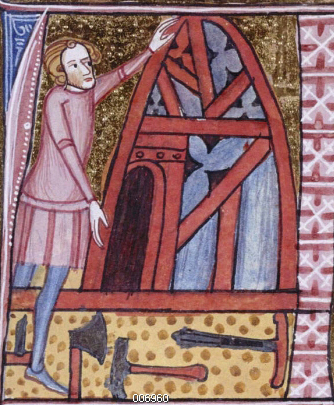
Cooper's monograph is predominately interested in medieval artisans, how they formed artisan culture and were appropriated in late medieval texts as both positive figures of social order and possible sources of malcontent. Coopers text provides an interesting look into labor, focusing on the laborers themselves, and does so from a different perspective than many studies on guilds and guild culture have taken. As I read for my exams, it seems more and more that current critical work is focusing on a multi-layered approach, such as John Watts' call to move away from grand narratives of history and to focus on the varied sources of influence on any given time, place, or social strata in late medieval Europe. Accordingly, Cooper considers multiple perspectives of medieval artisans and their cultural cache, looking at the historical reality of medieval artisans, texts on those artisans, the ideological concept of the artisan in late medieval Europe, and the concern that artisans could represent to medieval audiences. The above image, for example, demonstrates Cooper's point, as she argues that at first glance the artisan appears to be a positive figure proudly building, but the text following shows that this craftsman is literally building upon a foundation of sand and thus represents an immoral (and irreligious) life. 

While my research interests definitely dip into labor, my reading up to this point has led me to be more familiar with mercantile culture. Cooper's discussion of the artisan bears a great deal of similarity with the development of the merchant in this period. Both the merchant and the artisan show growing economic power, social standing, and cultural importance in the Middle Ages. Furthermore, each demonstrates some social concerns over the growing importance of a continuously monetized and commercialized society. One primary difference perhaps lies with the merchants more negative image, especially closer to twelfth and thirteenth centuries, but both the merchant and the artisan represent a similar issue: a form of employment that, due to changes in population and commercialization, gains greater power to transgress social boundaries. It is of little wonder then that Cooper's first chapter in particular treats texts that deal with the intersection of the merchant and artisan, predominately in their marketplace interactions. In these texts, such as Caxton's Dialogues, Cooper discusses how the role of the merchant in moving the artisan's goods to market creates tension, yet even in buying from the artisan directly Caxton's text suggests tactics ranging from demeaning the quality of the artisan's work to ad hominem attacks in order to attain a good price for the goods in question. 


I also found Cooper's second chapter of great interest, specifically in how she considers artisans as "not only makers of domestic space, but residents in it"(58, original emphasis). Often, previous critical attention on artisans has focused predominantly on guild construction and culture, possibly due in large part to the survival of several guild documents. Cooper makes the point, for example, that much previous critical work on artisans has focused on mystery play cycles due to the direct involvement of guilds in the production of the texts and performances alike. Instead of following this trend, Cooper, traces artisan culture through a number of texts, spending a fair amount of time on Chaucer's The Canterbury Tales. While Chaucer's texts have certainly met with their fair share of attention, Cooper uses the social cross section that the Tales provides to show the interaction between artisan cultures of various levels, even pushing to explore the gender dynamics contained therein. Cooper's text deserves more engaged treatment than is provided here, and I certainly find the voice that her text adds to the conversation of my exam reading valuable and pleasing. 

Antonio Gramsci, “Selections From the Prison Notebooks.”


Gramsci, Antonio. “Selections From the Prison Notebooks.” An Anthology of Western Marxism: From Lukács and Gramsci to Socialist-Feminism. Oxford: Oxford UP, 1989. Print.


NB: The Gramsci selection I'm reading is from an anthology and is accordingly edited down a fair amount. I'll be commenting on what is in that selection, but it is likely that there is other context that is not present therein. 

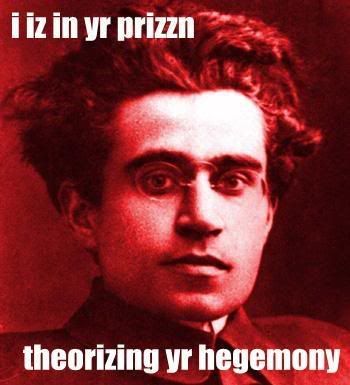
In this section of his larger text, Gramsci is primarily interested in intellectuals and their effect on cultural hegemony. According to Gramsci, the development of intellectuals in a given social strata is a necessary step towards the development of ideology and hegemony for that social group. For Gramsci all labor requires some level of intellectual engagement and creativity, but only certain intellectual labors are upheld as "Intellectuals," and those Intellectuals use apparatuses such as education and media to propogate ideology. As Gramsci states, "all men are intellectuals, one could therefore say: but not all men have in society the function of intellectuals" (115). As intellectualism thus takes on a hegemonic function, it becomes necessary to separate the activity of the proletariat from that of the intellectual. Thus restricted from considering themselves or their labor as intellectual, ideology from the institutionally approved intellectuals can work to maintain the status quo. 


In this section, Gramsci spends some time discussing the role of intellectuals that claim to be "independent" from the state. His primary example is the Roman Catholic Church, which he highly critiques. Gramsci suggests that the claim of independence allows such intellectual organizations to impose ideology within a facade of impartiality. This section reminds me of Kellie Robertson's discussion of the Labor Statutes in late medieval England, specifically in how many Church officials began to orient writings and sermons to suggest that compliance to these statutes is the morally correct method and that violating them is a pathway to sin. Thus, you could use Gramsci's perspective to argue that the specialized, independent intellectuals of the church hierarchy are using their position to push an ideology that agricultural laborers should remain in their plight with low politically and economic power, being satisfied that in doing so they are acting as God mandates.

Tuesday, January 29, 2013

Stephanie Trigg. “How to Live.”

Trigg, Stephanie. “How to Live.” Ed. Oxford Twenty-First Century Approaches to Literature: Middle English. Edited by Paul Strohm. Oxford: Oxford UP, 2007. Print.

Trigg's essay works more to consider how to approach readings of medieval conduct literature rather to push a single reading of her own. Considering both texts that are expressly in the genre of conduct literature, such as John Russell's Boke of Nurture and Ailred of Rievaulx's De institutione inclusarum in addition to other texts that Trigg reads as conduct literature, such as Sir Gawain and the Green Knight. While not pushing a single reading, Trigg's essay is largely interested in how conduct literature constructs privileged social identity, both in positive and negative examples, and what these constructions may say about concerns or realities of everyday medieval life.

In her "Three illustrative topics" section, Trigg focuses on how Carving, the Mouth, and Touch operate in conduct literature. Carving, as Trigg demonstrates, involved a social performance that was tied into the service to a household, the progression to knighthood, and loyalty to one's lord. Issues surrounding the mouth are doubly problematic as the mouth contains the potential to overindulge in food or to eat improperly as well as the capacity to perform poorly in public speaking. While the section on touch is the shortest, Trigg provides a brief glimpse into how touch seems to provide an intimate and social function, one that is suggested as both pleasant and risky to propriety. In sum, Trigg's article is perhaps most useful in its suggestion of how it is possible to read these texts rather than the readings themselves. Trigg draws in sociohistorical context to draw connections between conduct and other late medieval literature, demonstrating how a critic may tie threads between these texts and gain a better understanding of the issues that lie between them.

Saturday, January 26, 2013

Carolyn Dinshaw, "Temporalities."

Dinshaw, Carolyn. "Temporalities." Oxford Twenty-First Century Approaches to Literature: Middle English. Edited by Paul Strohm. Oxford: Oxford UP, 2007. Print.


In her essay, Dinshaw uses The Book of Margery Kempe as a model to discuss conflated temporalities. Margery Kempe, as Dinshaw argues, is constantly in a state that congeals past, present, and future in her mystic attempts to gain access to Christ. Margery Kempe is often ciriticized and ridiculed for this process, although her text suggests that her approach to temporality is the more spiritually sound. For Dinshaw, Margery Kempe’s temporality invokes a queer sense of history, one that steps outside of the normative perceptions of time that is embodied in Kempe physically. In Dinshaw’s continued reading of The Book of Margery Kempe, she demonstrates how Kempe’s own body is at odds with the conflated temporality of her mind, bringing her closer to Christ’s suffering.

However, for Dinshaw Kempe’s temporality is only one part of the queer history of the subject, requiring consideration of Hope Allen, Kempe’s first modern editor, and Dinshaw herself as critics of Margery Kempe. In a sense, this section provides an interesting commentary on the work of medeivalists in general, or any critic of literature for that matter, as we are at the same time involved in the sociohistorical context of our specific texts, the critical history of those texts (sometimes spanning centuries), and our current research on that text. Dinshaw’s discussion of Hope Allen’s connection to Margery Kempe, speaking of her as a person she has an engaged relationship with, strikes familiar with how I’ve often heard colleagues and established critics describe their work, referring to Harley 2253 as “my manuscript” or even invoking Chaucer or Gower as a friend to join the conversation. Personally, I’ve even felt a rather fondness for the Wife of Bath from my MA thesis work, and often imagine her as an outside commentor on other Middle English texts I’m reading. While Dinshaw states early on that the point of conflated temporalities is not necessarily a new development in readings of Margery Kempe, or medieval literature for that matter, her consideration of how we as critics further conflate temporality adds an interesting perspective on our role of critics of medieval literature. 

Wednesday, January 23, 2013

Juliann Vitullo and Diane Wolfthal “Trading Values: Negotiating Masculinity in Late Medieval and Early Modern Europe”

Juliann Vitullo and Diane Wolfthal “Trading Values: Negotiating Masculinity in Late Medieval and Early Modern Europe.” Money, Morality, and Culture in Late Medieval and Early Modern Europe. Edited by Vitullo, Juliann and Diane Wolfthal  Surrey, UK: Ashgate, 2010. Print.


In their chapter, Vitullo and Wolfthal plot how ideas of masculinity are tied to and, in some cases, exemplified by money and trade in late medieval Italian and Northern European art and literature. First covering the critiques and concerns over the increasingly monetized culture and the role of merchants, Vitullo and Wolfthal read texts that show how merchants, in particular, tied ideas of masculinity, fertility, and money in order to push against these critiques. Focusing first on Italy, specifically Florence, Vitullo and Wolfthal demonstrate that merchants consciously pointed to the benefits that their trade provided for the common good and, at the same time, tied this to merchants' roles as fathers providing for future generations. By continuously tying to this language of paternal responsibility, the merchant's trade is argued to be a positive force in the community rather than negative. Vitullo and Wolfthal ties these same threads through the art of these respective regions, showing how what is emphasized and de-emphasized in artistic representations of merchants becomes part of the rhetorical move to reconcile merchants with heavily anit-mercantile dialogues in late medieval Europe. 

What I find most interesting in this chapter is how the masculine fertility itself is tied to money. One of the larger complaints against money and merchants goes back to Aristotelian condemnations of how usurers, and many merchants, attempt to multiply money "against nature" (156). To counteract this, the positive image of the merchant as father, both literally and in his contributions to the community, are employed in art and literature. Furthermore, many artistic depictions of merchants begin to show them with wives and children in order to better emphasize that their procreation and trade is proper, fitting in with the natural order of things and aiding future generations. While my work tends to focus more on gender issues with women and money, this chapter will, I think, force me to consider not only the role of men as merchants more thoroughly but fertility and reproduction in the context of an increasingly monetized culture. If the fertility of male merchants is vital to ameliorate their profession, how does this work for figures such as the Wife of Bath and Lady Mede?

Robert S. Sturges “‘Nerehand nothyng to pay or to take”: Poverty, Labor, and Money in Four Towneley Plays.”

Robert S. Sturges “‘Nerehand nothyng to pay or to take”: Poverty, Labor, and Money in Four Towneley Plays.” Money, Morality, and Culture in Late Medieval and Early Modern Europe. Edited by Vitullo, Juliann and Diane Wolfthal Surrey, UK: Ashgate, 2010. Print.


In his chapter, Sturges sets out to take up the challenge set forth in David Aers' seminal 1987 essay. Specifically, Aers called for critics to move away from constructing "harmonizing" readings of medieval literature and instead more fully consider the role of social, economic, class, and labor issues that impact these texts. Aers' critique is similar to that raised by John Watts over the construction of grand narratives of history, and the critical approach seems similar to the practice of Landesgeschichte in current German scholarship. 

To get back to the article at hand, Sturges moves to apply Aers' suggested approach to four Towneley plays that critical consensus attributes to the Wakefield Master, namely The Killing of Abel, Noah and his Sons, The First Shepherd's Play, and The Second Shepherd's Play. For Sturges, the fact that each of these can be attributed to the Wakefield Master is significant as he considers the role of labor, class, and economics in Wakefield specifically and how this dynamic impacts these plays. Medieval historians (such as Joel Kaye, Diana Wood, and Martha Howell) commonly agree that late medieval Europe saw an increase in the economic power of the lower classes. However, Sturges points out that Wakefield was still heavily dominated by the manorial system of agricultural labor rather than one that allowed agricultural laborers to exchange their labor  in a market, physically moving to work in areas offering higher pay rates. According to Sturges, the inability of laborers in the manorial system to take their labor to better markets, along with their awareness of the potential for increased economic success that market, lead to both increased fantasies about the freedom granted by monetary remuneration and jealousy for those participating in these forms of exchange. 

In the four plays from the Towneley cycle, Sturges reads the impact of this manorial labor into concerns of the lower classes. Cain, for example, views tithing as an unfair tax imposed upon him from his manorial lord despite his poor crops, and the shepherds from The Second Shepherd's Play bemoan their poor condition as a direct result of mistreatment from the local gentry. Despite these complaints, however, any move to better one's lot in life is met with judgment and condemnation. Cain's refusal to pay his tithe is highly balsphemous, and Mak's theft of the lamb to feed his starving family is punished. While it would be a mistake to take this reading dogmatically, which would simply be building a new grand narrative for John Watt to decry, taking the role Wakefield's specific economic and labor conditions into these plays does add an interesting perspective and possibly provides context for the many economic issues in these plays.

Monday, January 21, 2013

"The Crucifixion" from the York Cycle

"The Crucifixion" from the York Cycle:


Primarily, "The Crucifixion" from the York Cycle seems to be about objects. In this sense, I don't see much more in the text than was in the brief introduction. Continuously, the soldiers that are nailing Christ to the cross are far more interesting in the objects involved in their trade, such as the pre-bored holes on the cross and the nails themselves. Furthermore, as the introduction indicates, the soldiers actually view Christ primarily as an object of their labor. There is far more discussion between them of how to line up the bones and sinews to the proper nail locations on the cross than of Christ himself, who they only address twice in the play. For the soldiers, the Crucifixion is merely a job that needs to be performed with the tools of their trade like any other.

This only highlights what I find most odd about this play: the fact that it was sponsored by the "Pynners and Paynters." As with other plays, the guild sponsoring could use the production of the play as a way to advertise their goods, and the introduction indicates that the Pynners, who produced nails and wire, would be able to use their wares extensively in a production of the Crucifixion. Yet, the very idea that seeing nails used to crucify Christ would make one desirous of purchasing said nails seems quite odd. I can't help but think of this in a relatively modern setting, perhaps among the heavy commercialization of 50s and 60s television: "Use Johnson Nails. They're good enough to torture our Lord and Savior, so they're plenty good for that new siding job!" I think this may be part and parcel with a different approach to this material, especially in the cultural event that mystery play cycles involved, but this instance strikes me as rather odd.

"The Second Shepherd's Play" from the Towneley Cycle

"The Second Shepherd's Play" from the Towneley Cycle:


Much like the play of the same name in the Chester Cycle, and - I'm coming to realize- several other plays in mystery cycles, "The Second Shepherd's Play" from the Towneley cycle is chock full of comedic potential. The play opens with our three shepherds complaining of their sorry lot, being forced to work in dreadful weather and often being preyed upon by thieves of various social standings (this beginning section is also full of several references to "The First Shepherd's Play" that, if I were to go back and read it, would make much more sense). After an anti-feminist rant about the ills of wives, the shepherds welcome Mak to their grouping, an individual who has a history of theft. Mak rants on about his wife, citing how her annoying tendency to have a kid every year or so is leading him to financial ruin (rather ignoring the role he plays in the matter), and once the shepherds go to sleep he casts a spell to keep them sleeping. 

Thus we enter Mak and his wife's elaborate plan to steal a single lamb. Mak steals away with the lamb to his house, where his wife, after citing that being caught will surely lead to Mak being hung as a thief, lays out a plan to hide the lamb as if it were a newborn (which is the reason for the above creepy baby blanket; seriously, wtf?). Mak returns to the shepherds, releases the spell so they may wake, and plays off as if nothing had happened. Later, when the shepherds discover the missing lamb, they go to Mak's house to accuse the likely culprit. He and his wife put on a comically poor show of the lamb as a newborn, under wrappings so as not to disturb it in its sleep, and the shepherds eventually buy it and leave. The plan is only foiled when, realizing he failed to give the child a gift, one of the shepherds returns and wants to gift the child and look upon it. As the lamb is revealed, Mak and his wife come up with a series of elaborate excuses for why the child looks like a lamb, ranging from a broken nose to an elven curse, yet the shepherds (finally) catch on. Eventually, after punishing Mak, the shepherds witness a vision from an angel of God and go to where Christ is being born, witnessing the birth and hearing Mary present the child Christ.

The interplay with Mak, his wife, and the child comically mirrors the birth of Christ in the manger, playing heavily on the pun of the lamb and Lamb of God. Interestingly, as the play is functionally supposed to be about the witnessing of the birth of Christ by the shepherds, said birth plays a very small role in favor of the more comedic scenes. Rather than blasphemous, the play functions more like an entertaining extrapolation of what could be a rather brief play. 

"Abraham and Isaac" from the Brome, Suffolk Play

"Abraham and Isaac" from the Brome, Suffolk Play:


From a manuscript that may have never actually had a full cycle performance, the Brome "Abraham and Isaac" focuses on the pathetic dynamic of a father who has been commanded to slay his own son. The narrative of the play does not drift in any significant manner from the biblical tradition, but the dialogue between Abraham and Isaac, lamenting over the deed that must be done, goes on for a few hundred lines. Isaac first questions what wrong he has done to deserve killing, citing that he would gladly lay down his life if he is guilty, then moves into asking his father to do the deed quickly and to lie to his mother so that she would not have to deal with the grief of losing her son on top of the knowledge that her husband had killed him. The focus on pathos here is similar to the above image from the Ghiberti baptistery doors in Florence, where the Angel (and not Angle as I seem to first type every time) literally holds back the hand of Abraham at the last minute. Even after he learns that God has granted him his life, Isaac still worries that he will be slain, specifically asking his father not to strike him down when he bends over to tend the fire. 

Beyond the pathos of Isaac's near-sacrifice, the aspect of this play that interests me is the contractual relationship between Abraham and God. Early on, Abraham indicates that his land and property is rented from God; "Thow hast goffe me both lond and rent, / and my lyvelod thow hast me sent" (4-5). God's request for an additional sacrifice could, on the surface, appear to be an alteration to the nature of the contract with Abraham that previously required the sacrifice of livestock in exchange for land and well-being. However, this ties into a larger discussion of the exchange dynamics of spiritual reward and God's grace that crops up in a great deal of Middle English literature. Grace cannot be purchased, even with good works, as that grace represents an exchange value that no human action can ever pay for. Furthermore, considering such an exchange in the dynamic of need based economics, mankind has a much greater need for God's grace than God has need for anything mankind can provide. Faith, and the good works that come from that faith, may earn grace, but cannot pay for it. When God asks Abraham for a new sacrifice, he is not altering a 1:1 economic contract but instead asking for a test of faith to determine if grace will be granted. 

"Noah" from the Chester Mystery Play Cycle

"Noah" from the Chester Mystery Play Cycle:


"Noah" in this cycle seems to be a mix of spectacle and humor, with preference towards the former. Much like "Creation and the Fall of Man," "Noah" has ample opportunity for the sponsoring guild to show off their contribution through the props and set of the Ark and animals traveling therein. While I'm not entirely certain how this would apply to the "Waterleaders" that sponsored "Noah," the "Creation" play was often sponsored by the Drapers who used their wares extensively in the production as both a display of their economic power and an advertisement of their product. Predominantly, "Noah" is a long catalog sandwiched between God's pronouncements to Noah. The only real deviation from this dynamic is the refusal of Noah's wife to enter the ship.


Noah's sons and daughter-in-laws promptly get with the program and aid in the construction of the ark, despite the fact that "Women be weake to underfoe / Any great travayle" (67-68), but Noah's wife presents a constant refusal to enter the ark. In large part, this seems to be a chance to have an anti-feminist bit of comedy as Noah's wife flippantly decides to be obstinate, takes time to go drinking with her fellow gossips, has to be carried on board the Ark by force, and even strikes Noah once she is secured on board. In some ways this reminds me of critical discussion of Chaucer's the Wife of Bath, specifically those that take her as an anti-feminist character. Personally, I see what the Wife of Bath is doing as subverting that role of the gossipy middle aged woman, exchanging sex for authority from her husbands. Noah's wife seems to be the flat, normative version of that approach, an older woman given to drink, gossip, and obstinacy for the sake of being obstinate. 

Saturday, January 19, 2013

"The Killing of Abel" from the Towneley Play Cycle

"The Killing of Abel" from the Towneley Play Cycle
(NB: I initially labeled this as part of the Chester cycle, which I mixed up with one of the other items, "Noah," which I will be reading next.)


Like "the Second Shepherd's Play" from the Chester Myster cycle, "the Killing of Abel" seems to be a play that seems like a point of comedic relief for the audience. Coming after the Fall of Lucifer, Creation, and the Fall of Man - all of which have relatively heavy subject matter - the obscenities, ridiculous blasphemy, and continuous calls to kiss the devil's ass provide a bit of levity (or as Cain says, "Yei, kys the dwills are behynde" (266)). 


Aside from the comedic elements, "the Killing of Abel" demonstrates concerns about the construction and maintenance of an effective devotional economy. Abel attempts to explain to Cain that burning their offerings in thanks to God's gifts is the proper course of action, but Cain only understands direct exchange of worldly goods. This is in part highlighted by Cain's labor, as he is shown as a hard worker plowing his fields, attempting to get his employees and animals to labor as well, situating Cain firmly in the material world and somewhat disconnected from the spiritual. 


Cain says he owes God nothing due to a season of poor crops and because God didn't lend him seeds when Cain needed them. Continuously, Cain dismisses the promise of spiritual rewards as reasons to burn offerings, citing his worldly needs and unwillingness to give up his goods for what he sees as a poor investment. As such, Cain holds back his best grain from offering and only burns a small amount of his worst grain. God presents his displeasure and further tries to explain the dynamics of spiritual exchange to Cain: "If thou tend right thou gettys thi mede; / And be thou sekir, if thou teynd fals, / Thou bese alowed ther after als" (294-296). Even with this explanation Cain, rather than ask forgiveness, thinks only of revenge and escape. Cain, unable to conceive of an exchange economy for spiritual, and thus immaterial, reward, fails to maintain the spiritual contract with God. This inability to uphold contracts is only emphasized with the closing exchange between Cain and Garcio, with Cain making a series of promises that Garcio ridicules, showing how Cain cannot even maintain his responsibilities for his servants. 


Kellie Robertson, "Authorial Work"

Robertson, Kellie. "Authorial Work." England's Empty Throne: Usurpation and the Language of Legitimation, 1399-1422. Ed. Paul Strohm. New Haven: Yale UP, 1998. Print.


Much as in her monograph, Kellie Robertson's interest in this chapter lies with the designation and social constructions of labor. In "Authorial Work," Robertson explores the liminal space between labor and leisure that provided points of contention for Middle English authors in the fourteenth century, namely John Gower and Geoffery Chaucer. Rather than simply leaning on the buzzword cache of liminality, Robertson seeks to designate how the middle space between work and relaxation in which Gower and Chaucer place their work, using different methodologies, demonstrating how this third area of writing labor allows for greater understanding of labor issues in late medieval England. As Robertson states (much more elegantly), "To occupy the middle is to be aware of the usual binaries without necessarily affirming them, an awareness Chaucer displayed as a writer, and one that we must cultivate as belated readers of medieval work and culture" (458). Robertson displays her usual interest in labor issues in this chapter but focuses on how intellectual labor was under similar scrutiny as the agricultural in post-plague England. The labor statutes, for example, required that even intellectual labors carry papers designating their right to travel, a legal requirement largely aimed to prevent agricultural workers from simply moving to a different region that offered higher remuneration for their labor. Robertson argues that this places a pressure on Middle English authors to validate their labor, a trend she plots through Gower, Langland, Hoccleve, and Chaucer. Largely, Robertson focuses on how Gower and Chaucer self consciously pitch their work in this liminal space outside labor and leisure, demonstrating very different concerns in these poets. 

Gower's objective writing space:


For students of Gower, the above image of the poet aiming his arrow of satire at the world is a common sight. For Robertson, this depiction embodies the space that Gower's writing places him in, namely that the space of writing which is "inter labores et ocia" is a risky position: "If, as the manuscript illustration suggests, the writing space for Gower is a disembodied and hence unregulateable one, it is also a potentially precarious one; so too, we might conclude, the contrafactual of the late medieval poet whose own work exists outside of contemporary debates about productive labor" (442, 458). Gower, according to Robertson, needs to validate the role of writing as between labor and leisure in order to mitigate the socially disruptive potential of work conducted in this space. 

The Fantasy of "knowable labor" in Chaucer's The Canterbury Tales:


In her longer section on Chaucer's The Canterbury Tales, Robertson argues that the choice of pilgrimage for the frame narrative, along with Chaucer's personal history in bureaucratic appointments involved in regulating labor, present a larger concern about the role of identity in the labor statutes. Unlike Gower, who takes up his third space of writing to engage in satire and point out some of the risks of writing labor, Chaucer chooses pilgrimage, itself an act that is neither labor nor leisure, to demonstrate the difficulty and problematic nature of labeling and identifying labor. Furthermore, Robertson maintains that Chaucer's insertion of himself as the writing laborer, often failing in his own work, is an intentional move to demonstrate how difficult it is to label, from the outside, the validity and nature of one's labor, or even potential for labor, despite the requirements to do so in several points of the post-plague labor statues.  


Kellie Robertson, The Laborer's Two Bodies: Labor and the "Work" of the Text in Medieval Britain, 1350-1500


NB: The below is a book review I wrote in a seminar on Robertson's most excellent monograph. 

Robertson, Kellie. The Laborer’s Two Bodies: Labor and the “Work” of the Text in Medieval Britain, 1350-1500. New York: Palgrave Macmillan, 2006.
            In the Laborer’s Two Bodies, Kellie Robertson establishes the ways in which labor identities were represented, controlled, and subverted in Britain from 1350-1500. By discussing the rising issues of labor in the backdrop of a post-plague England, Robertson is able to evaluate the tension of labor between the three estates in addition to the various methods each used to either repress the labor force or defend their own work. In the process, Robertson evaluates a series of documents that represent various stages of this struggle, including the Legend of Good Women, Piers Plowman, Mankind, and the Paston letters. Additionally, Robertson’s writing consistently lends itself to rhetorical clarity. More than refreshing, however, this emphasis on lucidity is quite necessary due to her complex arguments, simultaneously utilizing neo-Marxist, Foucauldian, feminist, semiotic, and New Historicist approaches. The appearance of these arguments together can provide a daunting task for the reader, yet Robertson effectively introduces each element at the most effective juncture. In her introduction, Robertson presents a construction of the laborer’s body as idealized, punished, and read as a symbol itself, and it is this approach which ties the chapters together. In place of a central, formal argument for the book as a whole, the laborer’s body is a common topic at the heart of each chapter. This approach is its primary strength, allowing Robertson to discuss a wide range of labor issues in post-plague Britain and clarifying the complex issues around material and immaterial labor.
            In chapter one, Robertson’s focus is on the specifics of the labor statutes and their enforcement. While discussing the initial statutes’ attempt to control the labor force, Robertson contends that the laborer was now split into two bodies: one the more real, naturalized version repressed by the judicial process and the other the ideal theological model of a hard working peasant. In regards to the judicial body, Robertson argues that the move to public displays of punishment made that body a text to be read; “authorities wanted most of all to make labor (good or bad) a visible quantity, something to be read off the body” (16). The theological model attempted to further repress laborers by imposing an image of what they should aspire to be: content with their state. A prime example of this is found in St. Walston, whose hagiography is added upon to “emphasize the necessity of keeping one’s labor obligations” (35). The most compelling aspect of Robertson’s argument is the impact this dynamic had upon poets, especially Langland who “attempts to define the utility of his intellectual work in terms borrowed from this everyday world of material transactions” (45). This chapter serves to set up her construct of the immaterial versus the material and provides the historical backing of the labor statutes that runs through the rest of her text.
            Robertson’s intent in the second chapter is to both complicate the argument that the years Chaucer spent as a justice of the peace in Kent were a political respite and to show that this forced Chaucer to have direct interaction with the labor statutes, his duty being to enforce them. Additionally, Robertson discusses the precarious political environment Chaucer was involved in and how this increased scrutiny on the judiciaries as well as laborers placed more pressure on the poet to defend his own work. This is made all the more pertinent when one considers the most intriguing change to labor laws up to this point: that one could be tried not simply for action but for intent as well. Robertson contends that this in particular placed Chaucer in a tricky situation; “if the poet cannot vindicate his labor, it is in part because intention, and hence, identity cannot be adequately textualized” (64). Taking this into consideration, Robertson conflates the defense of women in the Legend of Good Women with “a defense of the poet’s own work, particularly since neither defense quite convinces” (64). This chapter not only provides greater insight into Chaucer’s political dealings but grants further understanding of the pressures placed upon the poet in an environment where work was so heavily questioned.  
            In her third chapter, Robertson deals with the use of the term comyn prouffit, tying it into her overall concept by discussing “the material history of this purportedly immaterial concept” (79).  Robertson documents how this term moves from legal terminology to Christian theology, being implemented as ideology to prevent laborers from taking advantage of the post-plague labor market. Robertson suggests that the initial use of the term was intended to reinforce the immaterial concept of medieval social hierarchy. The term, however, is quickly appropriated by rebels in their attacks against the labor laws, who use the term to suggest that a loosening of restrictions would be in the society’s best interest. As Robertson states, “the peasants did indeed believe that the master’s tools could dismantle the master’s house” (92). The common profit was further appropriated by heretics and then merchants, only retired from this cycle when it is supplanted by the idea of the commonwealth in the late fifteenth century. The need of the Tudor government to abandon the common profit as the predominant ideology in support of the hierarchy suggests an attempt to adopt a less fluid concept, one not as easily turned against those it is intended to entrench.
            The fourth chapter is the most divergent yet is equally as enlightening to the discussion of material versus immaterial labor. This chapter’s focus is on the analysis of two contradictory bodies in the gentry housewife: “the contradictions between a legal ideology that conflated the roles of gentry women and servants over and against the lived experiences that gave the female gentry significant power over both people and things” (120). The previous three chapters acted in a progressive manner, tracking the changes in the labor statutes and the resultant fallout in addition to the book’s larger discussion of material verses immaterial bodies. This chapter diverges from the trend, focusing less on the labor statutes and more on the gendered dynamic of household labor. Robertson’s arguments in this chapter are perhaps some of the most interesting in the book, utilizing Foucault and feminist theory in her analysis of the Paston letters to show how the gentry housewife possessed authority while simultaneously showing submission to her husband. This chapter displays Robertson’s ability to construct a coherent, multifaceted argument which grants a larger view of labor throughout 15th century England.
            Robertson’s fifth chapter reveals another interesting facet of the issue of labor, specifically the manner in which a dissident voice of the peasantry can by subtly packed into an otherwise innocuous form. Reading the historical context of East Anglia’s unrest over the 1446 labor statutes in Mankind, Robertson contends that the play contains a series of subtle subversions of the judicial and theological constructs designed to encourage complacence among laborers. Mercy’s advice to John superficially appears to counter the improper actions promoted by Mischief, but “by giving a social body to Mercy’s spiritual labor, the vice points out the literal physical labor that makes ecclesiastical discourse on allegorical labor possible” (157). In effect, Mischief actually undermines the repentance supposed to be evinced in the audience, subverting the normal theological order. The historical backdrop Robertson provides is the still changing labor laws, which now redefine vagrancy to further discourage the travel of laborers and even gives local authorities the right to impress unemployed workers into contracts against their will. Robertson goes on to discuss the play’s method of subverting the legal language most often used against laborers; “if Mercy accuses [English] of being too much in the world, the vices accuse his language of being too far from it” (180). Here again Robertson brings in the binary of the material versus the immaterial, displaying the inadequacy of the latter. By showing how Mankind is both influenced by and offers resistance to the 1446 labor statutes, Robertson reveals another voice of resistance from the third estate, a subtle tactic the student of medieval literature would do well to pay attention to. Effectively, this pushback complicates Mankind and brings closer scrutiny to how the morality play can operate as a vehicle for social dissidence.
            Robertson’s book facilitates a greater understanding of the complexities of labor issues in late medieval England, bringing to the forefront not just the historical implications but how these issues influenced the literature of this period. This book is of especial value to the student of medieval literature as it informs the impact of the post-plague labor crisis across British society and the subsequent affect this had upon texts of this period. The additional pressure placed upon the poet in this age, when all labor was under new scrutiny, sheds new light on the forces behind later medieval texts. Robertson’s complex, multifaceted arguments in The Laborer’s Two Bodies are worthwhile for the greater understanding of the implications and fallout of the labor statutes in post-plague England, not only adding historical context to the reading of the texts produced in this period but demonstrating how economic issues directly impacted British society, judicial proceedings, and literature. 

Friday, January 18, 2013

Wynnere and Wastoure

Wynnere and Wastoure:

This (likely) fourteenth century Middle English poem is somewhat perplexing from a generic perspective. Like many of the Middle English texts I've covered thus far, Wynnere and Wastoure (Or  Earner and Waster for the non Middle English inclined) is relatively short at just over 500 lines (and I was seriously not trying to front-load short texts; now I need to make myself read longer ones so I don't go insane closer to my exam). Wynnere and Wastoure opens with a calling back to classical ties in England, in much the same way as the opening lines of Sir Gawain and the Greek Knight, and then shifts into a brief commentary on the nature of story telling, lamenting how the fool who can perform a tale comically receives more praise than the author who penned said tale, a tension still alive today with the low public notice of song, movie/TV, and ghost writers. After the first fitt, however, the narrative shifts into a dream vision, very similar to William's in The Vision of Piers the Plowman, and witnesses a fantastical scene with opposing armies lined up to face one another. After the narrator, who is not given any defining characteristics and is for all intents and purposes a floating microphone that simply witnesses the following events. After the opposing barons are forced to come to a hearing before the king (who puts great emphasis on solving these sorts of problems through legal channels rather than martial), the narrative picks up as the titular characters are given the chance to verbally spar back and forth.

Wynnere (Earner):


While I have some issues with the seemingly anti-semitic aspects that can be seen in the Dickens' A Christmas Carol (or at least film adaptations thereof), the image of Ebeneezer Scrooge is effective for describing the character of Wynnere in this text. Specifically, Wynnere is a rich man (or is the term "job creator" these days?) and his arguments demonstrate a concern for fiscal responsibility and preparedness against future financial hardship. The image above, however, shows part of the problem with figures such as Wynnere's position: hoarding up wealth disallows the spending of that wealth, leaving the individual in question living as if they were financially destitute despite the means to do otherwise. Scrooge alone in his house before being visited by the three ghosts, refusing to burn more than a single candle or use any more fuel than is necessary to heat the house, is a prime example of this type of lifestyle.

Wastoure (Waster, or perhaps Spendthrift): 

Wastoure, on the other hand, advocates living large, hosting extravagant feasts and gifting those around him, with special emphasis of helping the poor. There are some similar currents running with Wastoure as in Sir Amadace, but if anything Wastoure is more focused on living large. That practice rather reminds me of the spending habits of young celebrities, specifically when involved in the music industry:


I'll be the first to point out that Lil Romeo isn't the best example as both of his parents were rappers of at least moderate success, but the extravagance with which his house is filled is beyond necessity, overly wasteful, and (if he didn't have his parents' wealth to fall back on) financially irresponsible. Wastoure is similarly indicative of a trend to spend irresponsibly, leaving little care to future financial shortfalls and trying to live as well as possible in the now. 

At this stage, the text becomes an intellectual debate between representatives of two opposing perspectives, with a great deal of derogatory name calling thrown in. At stake in this debate is the proper method of living, leading to Aristotle's Golden Mean as the obvious solution. What is further being discussed, however, is the proper method of exchange. In many ways, this ties to issues I've been seeing in John Gower's Confessio Amantis Book V, where the first argument against avarice is primarily against the act of hoarding (full disclosure: I wrote a term paper on this topic last semester and haven't yet received feedback yet, so I could be completly off my rocker on the following). I would argue that what's at stake here is the maintenance of healthy exchange economies; if money is prevented from circulated, the entire economy is detrimentally affected. For the hoarder, currency that one is unwilling to exchange loses, by definition, its exchange value, a point Wastoure pings Wynnere on; "What scholde worthe of that wele if no waste come?" (253). Furthermore, a tight money supply caused by hoarding inhibits the ability of other participants of the exchange economy to engage in trade as either they or their trading partners have less money to spend. Diana Wood and Joel Kaye (in his introduction to Economy and Nature in the Fourteenth Century) discuss how, in response to regular destabilization of currency from monarchs, hoarding began to become a problem in local economies of late medieval Europe. Thus, by actively withholding himself from spending, Wynnere is harming the exchange economy at large. 

Wastoure's actions don't seem to have as widespread of a detrimental effect, but in addition to leaving himself destitute over spending leads to incurred debt, the selling of patrimonial lands, and, according to Wynnere, a destabilization of proper social order. Comparing the two arguments, it seems that Wynnere is mostly concerned with stability and order, while Wastoure is interested in maintaining homosocial bonds and supporting the poor. In the end, the king does not cast judgment so much as he lauds each for their respective beneficial aspects, and sets them to tasks that highlight those qualities. Leaning on the Golden Mean,  Wynnere and Wastoure seems to suggest that both extremes harm proper methods of exchange, and in either case disrupts social order. 

Thursday, January 17, 2013

Diane Cady "Symbolic Economies."

Diane Cady "Symbolic Economies." Oxford Twenty-First Century Approaches to Literature: Middle English. Ed. Paul Strohm. Oxford: Oxford UP, 2007. Print.


In her contribution to Strohm's companion to Middle English literature, Diane Cady explores how Jean-Joseph Goux's work in Symbolic Economies applies to work in Middle English Literature. Goux's text aims to consider a "style of thought" across "economics, linguistics, and psychoanalysis" (124). For Goux, these social domains share a common "investment in exchange and value, an investment that is gendered" (125). In short, efforts to apply controlling constraints and rules on matters of language and economics tend towards gendered paradigms, women associated with a changing and chaotic force while men are the controlling presence that applies order and structure to that chaos. Throughout her chapter, Cady plots out how medieval economic and linguistic thought applied similar paradigms, following from Aristotle's work on the matter. Cady concludes her article with a reading of the first three passus of The Vision of Piers the Plowman, considering the disruptive role that women and money play in the text and how male characters attempt to act as checks to that disruption.

Cady's chapter bears some similarity with her article, "The Gender of Money," which I will write something on later. In both cases, Cady interest is in the exchangeability of women in medieval thought, a trait that, like currency, requires careful control. As Cady states, "Money and women are imagined to have the same character: both are supposedly passive yet potentially powerful; both are unstable and do not hold their 'imprint' ... both endanger homosocial bonds; and both are seen as items of exchange" (126). This line of thought runs close to that in Cady's article, where she plots similar concepts in her reading of the Wife of Bath and Langland's Lady Mede; "Mede serves as a warning to all “wanton” women, who might, like the Wife of Bath, choose to “wander by the weye” (I.A.467), as well as a reminder to the reader that women, like money, are likely to wander if they are not controlled by society" (19). 

In this chapter, Cady spends more time plotting out some of the medieval economic thought at hand, specifically that of Aristotle and Thomas Aquinas, as well as tracing similar threads in Alain de Lille's Complaint of Nature, John Salisbury's Metalogicon, and Oresme's De moneta. Interestingly, each of these texts admits, to one extent or another, that language and/or money is an artificial construction yet attempts to lean on classical naturalistic arguments for each. Aside from demonstrating nostalgia for a pre-Fall condition in which language was purely literal and money was unnecessary, these arguments attempt to use nature to support gendered metaphors for considering the construction of language and money. Thus, grammar is necessary in language as a masculine force that brings order to a constantly changing linguistic and feminine mess, and improper exchange was often treated with the same language as sexual wantonness from women. Cady's treatment of Oresme is particularly telling in considering this construction against the constant instabilities of currency due to debasement from governmental sources seeking profit. I'm still trying to parse how the constructions here apply to other avenues of medieval economic thought, but Cady's close attention to the gendering of money and economic language is invaluable to any discussion of economics in Middle English literature, my own work first and foremost.

Wednesday, January 16, 2013

The Life of St. Francis in the South English Legendery

The Life of St. Francis in the South English Legendery:


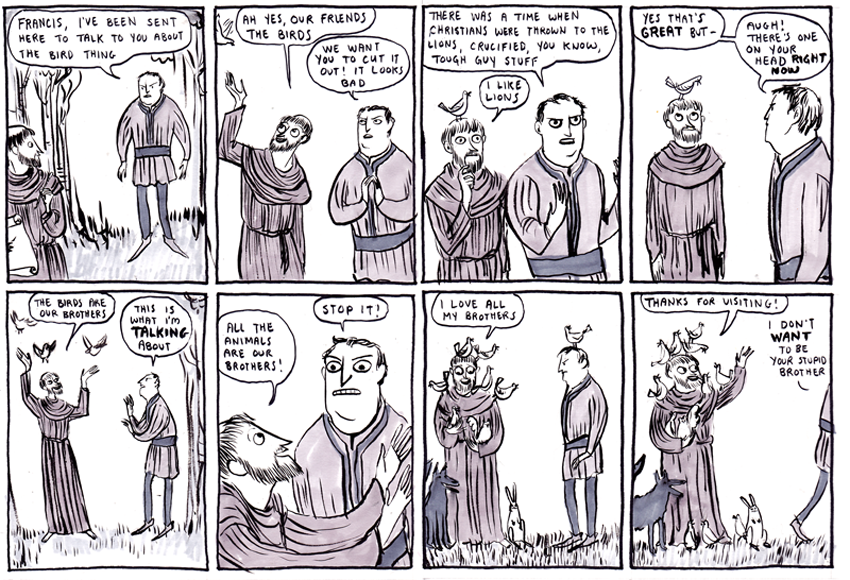
The Life of St. Francis is, according to the TEAMS text introduction, a heavily stripped down saint's life from its analogues. The just under 500 line poem treats St. Francis' life before he began his order, three scenes with animals (which is heavily cut down from the eleven episodes from the text's main source), and the final stigmata that eventually cause St. Francis' death. The text mostly treats these scenes briefly, but a few items stand out. 

Primarily, The Life of St. Francis's themes of labor and exchange are of most interest to me. After receiving his divine vision, St. Francis begins to use the goods of his father's trade, cloth, to help rebuild a church. His father, upon learning that Francis has taken the expensive material, beats Francis and his mother, and generally reacts in a manner that explains why St. Francis continuously hides in a ditch to avoid him. I can understand this tactic, as I myself once, after hiding in my mother's bedroom and jumping out to scare her, ran out of the apartment and hid in the bayou behind the complex until I was certain she had calmed down. 

St. Francis' father seems to demonstrate the deplorable behavior of merchants whose sole interest is in profit, tying to issues which Diana Wood discusses at length, eventually leading to the legal disowning of his son. St. Francis, on the other hand, engages in a great deal of honest labor, building churches and, in his discussion of his flesh as "Frere Asse," describing the actions of he and his followers as the ass's labor. Much as in St. Jerome, we have a dynamic in this text which privileges labor over economic exchange, tying to the larger anti-mercantile trend from theological sources in the thirteenth century. 

Monday, January 14, 2013

St. Jerome and the Lion

St. Jerome and the Lion, from New Haven, Yale University MS Beinecke 317, fols. 20r-21v:


Another rather short Middle English saint's life, St. Jerome and the Lion is primarily a retelling of Aesop's fable of the Lion and the Mouse. In this text, however, it is St. Jerome that heal's the lion's paw, leading to said lion helping the monastery. While there's not much more for me to chew on in regards to the fable itself, and the TEAMS text intro even suggests that this tradition may result from attempts to make an otherwise dreary saint's life more interesting (105), I find the form and terminology of the lion's service to the monastery rather interesting from an economic/labor perspective.

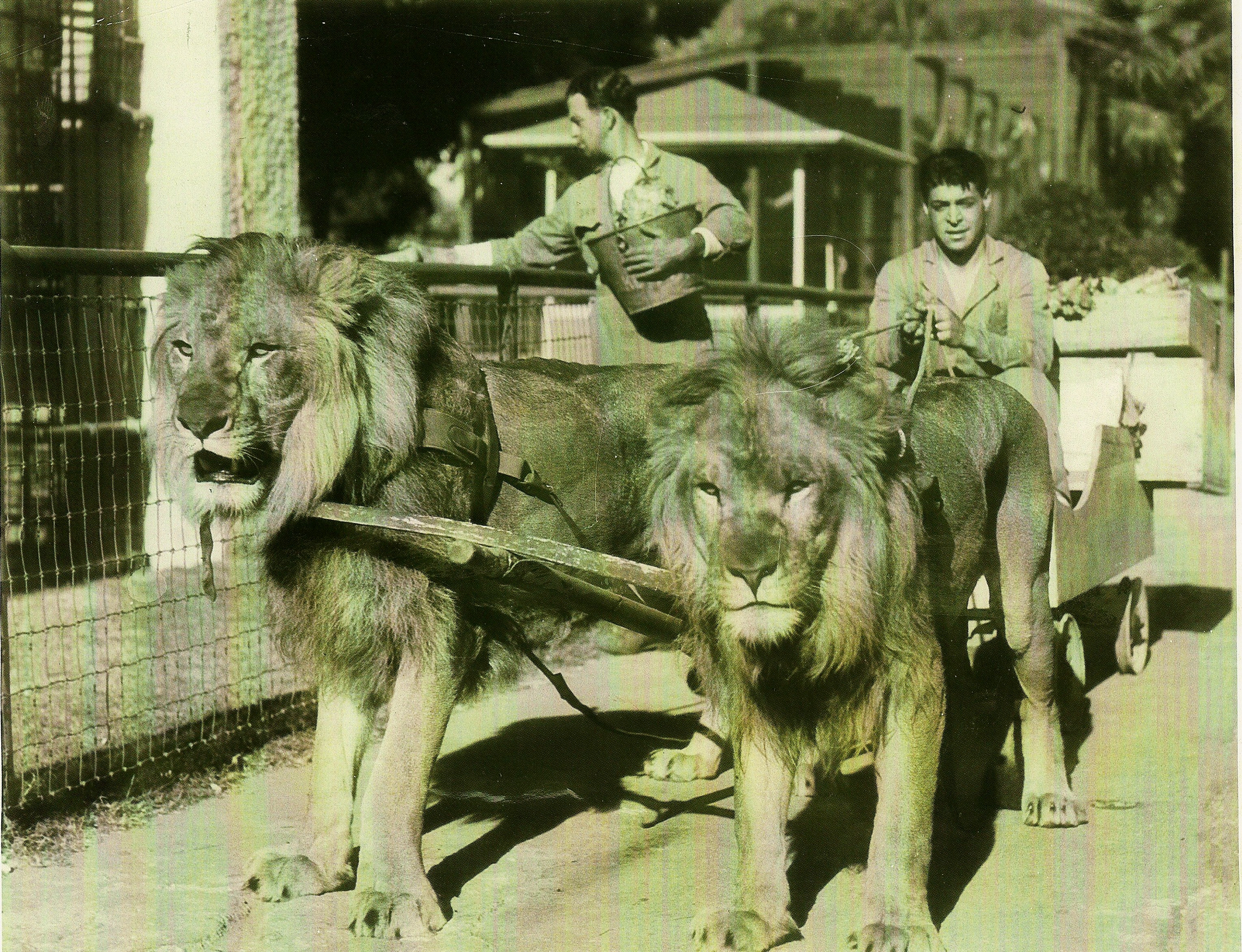
After he is healed, the lion hangs around the monastery as a tame best" (10), but rather than simply taking the animal on as a pet St. Jerome sees a greater purpose in the lion's presence. Specifically, Jerome believes that the lion came not simply for healing "but also for theire profyghte"(12). While the Middle English term "profyghte" can certainly have a wide range of definitions, there is a common connection to the sense of profiting from economic exchange, much like the modern connotation. Furthermore, Jerome promptly puts the lion to work herding the monastery's sole ass (btw, searching google images for "lion" and "ass" together doesn't end the way you necessarily want it to), bringing the donkey back when the monastery has need of it for labor. The lion has thus engaged in a service contract of sorts with the monastery, providing the labor of sheepherding in exchange for the initial tending of its wounded paw and later daily feeding.


The lion's mutually beneficial labor is disrupted, however, by wandering merchants who, while the lion is taking a nap, "stale the asse and had here forthe with theym" (20-21). The implication that merchants are willing, simply at seeing the opportunity, to steal a beast of burden from the monastery is certainly a pejorative judgment on the profession, tied to the general anti-mercantile perspective of the clergy in the 13th century, but even more so the move by the merchants to capture as much "profyghte" as possible works against the honest labor conducted by both the lion and ass. The lion takes over the ass's labor without complaint until the animal can be recovered, but the suggestion that merchants disrupt labor may tie to some of the issues raised by Diana Wood's book, specifically the move to curtail the various forms of monopolies by merchants who might do such things as hoard and withhold a commodity from the market in order to artificially raise the demand and subsequent prices for that commodity. Such a move is an immoral attempt to gain "profyghte," one that Jerome dismisses in favor for the "mede and rewarde" that is "to be had of Cryst yn Hevyn" (88-89). Profit in and of itself is not a bad thing, as long as one seeks the proper form of reward.

Wednesday, January 9, 2013

St. George and the Dragon in the South English Legendary

St. George and the Dragon:

(Image taken by me outside of Ulm Cathedral in Ulm, Germany)

With St. George and the Dragon, we get the dragon slaying narrative that's more familiar to a modern audience. The TEAMS text introduction does a fair job of plotting the nature of how this tradition has changed, shifting the strictly martyrdom story we had in The Martyrdom of St. George to a rather familiar episode of a city beset by a dragon, villagers who offer kine and eventually their own children as offering to appease said dragon, and a hero coming in to save the day by defeating the dragon, even directly saving the life a beautiful young princess in the process. The TEAMS introduction mentions that there is some scholarship suggesting that dragon slaying narratives in hagiography are really about the defeating of pagan religions, which is interesting when comparing the two St. George poems contained in this volume, but what stands out more to me is the similarity this narrative bears to romance, to the point of only tangentially operating as a saints' life. 


In sheer volume alone, the text of this poem is more interested in the city, Gylena, and the dragon besetting it than St. George, less than half of the 130 line poem involving St. George. Furthermore, as a hagiographical poem, this text is odd in that George's only real miracle is the taming of dragon, and that may have as much to do with the maiden's placing of her girdle on the dragon's neck (although at George's instruction), tying to other narratives of maiden's virginal powers over wild beasts and the sexual undertones that follow. In fact, if one were to replace the conversion narrative at the end of the poem with the knight marrying the daughter of the king, who has already been offered as prize for defeating the dragon, this text would read more as an episode from Mallory.  If anything, St. George and the Dragon reads like a short romance disguised as a saint's life. 


When comparing The Martyrdom of St. George and St. George and the Dragon, one differing aspect of the saint himself his activeness/agency in his given narrative. For the Martyrdom, St. George is, like many martyred saints, a figure who is active in the pronouncement and loyalty to his faith but passive in accepting his torture (although this general observation may be part of a larger lack of familiarity with Middle English saint's lives, so I will be reevaluating this perception often throughout my exam reading). St. George and the Dragon, on the other hand, finds the saint coming upon a problem, facing it down, and bringing an entire city to conversion. Rather than acting as the martyr whose sacrifice is demonstrative of his or her fate, the St. George who faces the dragon actively employs his strength of will. It is then, perhaps, little wonder that it is this tradition for the saint that is embraced by soldiers and knights; as a step away from being a heroic knight himself, George is an example of not how to die well but how to use one's faith as a weapon to tame, and then slay, your enemies.