
It's hard to argue against Arondel's truly awesome status as the knight's horse. He can outrun any beast he encounters, exacts his own vengeance on those that wrong Bevis, and even kills one king's son who attempts to steal him away. Furthermore, we get a great amount of detail about the attempts by various agents to gain possession of Arondel, in some cases just to take him away from Bevis and in others due to the virtues of the horse himself. In and of itself the treatment of Arondel is not odd, but what strikes me is that this treatment mirrors and supersedes that of Josian.

I'm more accustomed to seeing romance heroes needing to engage in "luftalkyng" as another aspect of a knight's identity as important as his martial prowess. In Chivalry and Violence in Medieval Europe, Richard W. Kaeuper suggests that as knighthood
and chivalry progressed the aspects of violence merely gained the company of
other codes rather becoming supplanted by them: “knowing how to talk and act
in refined company and especially with
ladies was added to knowing how best to drive a sword-edge through a mail coif
into a man’s brain” (5). The ability to engage in this courteous discourse with ladies has been somewhat muted in the other "Matter of England" texts I've read thus far, but the absence is more pronounced in Bevis than in King Horn or Havelok. At least in the other two texts the hero engaged in friendly, if awkward, discourse with his lady, and affection for her seemed to be a factor, although this is more debatable in Horn than Havelok. Bevis, on the other hand, seems at best unwilling to engage in intimate discourse or relations with Jasion. When she directly presses her affections upon him, Bevis denies her until Jasion promises to convert to Christianity. Later, when confronted by two lions, Jaison offers to aid Bevis by calming one (with her super virgin powers) while he fights the other, Bevis threatens to kill her if she interferes in his exploration of hyper masculine violence (more on this later). As the text proceeds, it quickly becomes obvious that Jaison is simply another possession that, like his horse Arondel and sword Morgelay, Bevis has to occasionally retrieve from someone not out of personal affection but because no one should take his possessions. Even the last few lines, where Bevis discovers his Jaison has died and dies himself in her arms, are preceded by the grievous discovery that Arondel has died in his stable. It is not clear if the despair that Bevis feels is due to Jaison's death or his steed's but without either of his prized possessions what's the point of going on living anyway?
In accordance with her role as one of Bevis' rightful possessions, Jaison only contains value for the knight as long as she maintains her virginity. Josian is married against her will to multiple agents in the text, but manages to keep her virginity in each case (in the last case by killing her overconfident bridegroom when he was expecting consummation). When Bevis recovers her, he denies the possibility of marriage if she is not still a virgin. In fact, Bevis has a virginity fetish throughout the text. After having an argument with Jaison early in the text, Bevis sends in reply to her apology "A mantel whit so melk: / The broider is of Tuli selk, / Beten abouten with rede golde" (1157-1159). I don't need to belabor the metaphor to draw out that the white cloth with "rede golde" border is demonstrative of the virginity that Bevis values so highly. Furthermore, when wounded in battle with the dragon Bevis is only healed once he takes a dip in water that virgin once took a dip in, because old virgin bathwater is apparently a holy dragon-poison cure (NB: in searching for images on bathwater, I came across this, which is apparently a thing but which I could've gone my whole life without knowing was a thing). Bevis even encounters a bishop who tells him he must never marry, on pain of death, unless the woman is a virgin, and upon winning a princess' hand in marriage at tourney, while Jaison had seemingly disappeared only agrees to the tentative marital contract once the clause of seven years of clean marriage (i.e. no consummation is included. Combined with Bevis' general disinterest in interaction with Jasion, or any woman for that matter, Bevis' focus on virginity seems to suggest an inability or desire to avoid intimacy with women.

Not to get largely psychological, but that fear of intimacy could spring from the relationship Bevis has had with his mother. After all, Bevis' mother arranged to have his father killed, married a foreign emperor, attempted to have Bevis himself killed multiple times, and eventually sold him to pagan merchants. Bevis' mothers' primary complaint about Guy, Bevis' father, was that he was too pious and did not spend enough time in her chamber "cleppen and kissen with al is might" (65). When confronting his mother, a seven year-old Bevis outright calls his mother a whore, and rejects her for the betrayal she has enacted against himself and his father. With these kinds of issues, it may be no wonder that Bevis does not welcome female intimacy and, when he does accept it, greatly privileges chaste interaction.
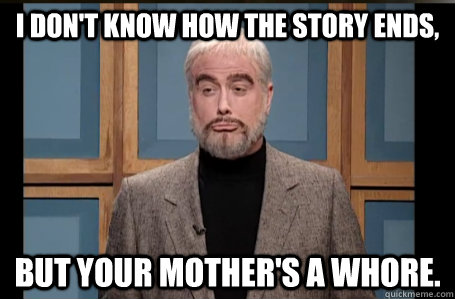
To close this post that seems to have gone on too long, I should briefly touch on the hyper-violence that Bevis engages in throughout the text. Bevis is prone to a series of violent outbursts whose severity goes beyond the appropriateness of the given situation. Even early on, a seven year-old Bevis assaults a porter for denying him entry into the castle in a scene that largely reminded me of that psychotic kid from The Butterfly (in general, Bevis has something against porters, as this is not the only one to receive poor treatment at his hands).
Once grown, Bevis has a tendency to strike out against anyone whom he has the least provocation from, including outright aggressors such as enemy armies and giants, but Bevis also enters a town and destroys its shrine and those worshiping there simply because they were not Christian, despite the fact that Bevis himself has been raised for the last seven years by an Islamic king who has not only taken great care of him but has granted him many gifts. If Bevis seems to strive for anything in the text, violence and conflict seems to be what he desires as he enters into fray after fray even when he could avoid it. Alongside his avoidance of the "luftalkyng" normally associated with romatic heroes, Bevis' ultra-violence seems to focus significantly on his masculine identity, perhaps using his male-ness as a way to act against he negative feminine influence his mother has presented from his birth.


No comments:
Post a Comment