Much like the play of the same name in the Chester Cycle, and - I'm coming to realize- several other plays in mystery cycles, "The Second Shepherd's Play" from the Towneley cycle is chock full of comedic potential. The play opens with our three shepherds complaining of their sorry lot, being forced to work in dreadful weather and often being preyed upon by thieves of various social standings (this beginning section is also full of several references to "The First Shepherd's Play" that, if I were to go back and read it, would make much more sense). After an anti-feminist rant about the ills of wives, the shepherds welcome Mak to their grouping, an individual who has a history of theft. Mak rants on about his wife, citing how her annoying tendency to have a kid every year or so is leading him to financial ruin (rather ignoring the role he plays in the matter), and once the shepherds go to sleep he casts a spell to keep them sleeping.
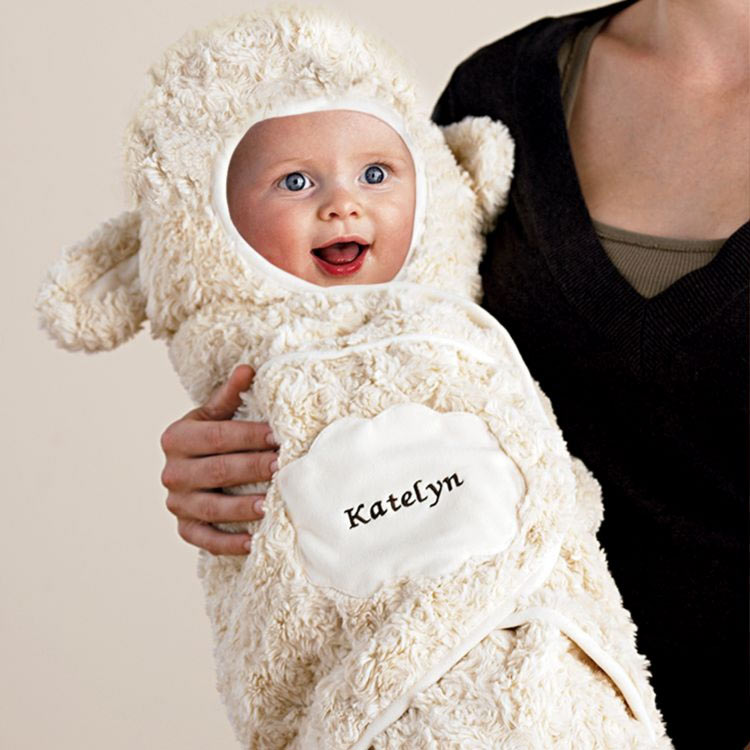
Thus we enter Mak and his wife's elaborate plan to steal a single lamb. Mak steals away with the lamb to his house, where his wife, after citing that being caught will surely lead to Mak being hung as a thief, lays out a plan to hide the lamb as if it were a newborn (which is the reason for the above creepy baby blanket; seriously, wtf?). Mak returns to the shepherds, releases the spell so they may wake, and plays off as if nothing had happened. Later, when the shepherds discover the missing lamb, they go to Mak's house to accuse the likely culprit. He and his wife put on a comically poor show of the lamb as a newborn, under wrappings so as not to disturb it in its sleep, and the shepherds eventually buy it and leave. The plan is only foiled when, realizing he failed to give the child a gift, one of the shepherds returns and wants to gift the child and look upon it. As the lamb is revealed, Mak and his wife come up with a series of elaborate excuses for why the child looks like a lamb, ranging from a broken nose to an elven curse, yet the shepherds (finally) catch on. Eventually, after punishing Mak, the shepherds witness a vision from an angel of God and go to where Christ is being born, witnessing the birth and hearing Mary present the child Christ.
The interplay with Mak, his wife, and the child comically mirrors the birth of Christ in the manger, playing heavily on the pun of the lamb and Lamb of God. Interestingly, as the play is functionally supposed to be about the witnessing of the birth of Christ by the shepherds, said birth plays a very small role in favor of the more comedic scenes. Rather than blasphemous, the play functions more like an entertaining extrapolation of what could be a rather brief play.

The Shepherd plays work on surprise. Towneley's Second Shepherd is justly famous for its comic development and its quintessential, almost gleeful anachronism. It lacks the locality of the Chester shepherds, but it presents a more coherent plot and likable characters. The play, as mystery play, sets up an expectation it takes great pains to defer. The shepherds who should be witnessing angels instead go on about their (comedic) business, complaining and arguing as all people do. The plot itself further defers the action, almost to the point of forgetfulness. By the time the angel shows up you'd be forgiven for having forgotten that the play was about those appearing angels in the first place; which, of course, makes the Annunciation that much more powerful. As the angels surprise the shepherds, so the play surprises us by making the shepherds English, forcing the angels out of our heads, and then dropping them on us suddenly.
ReplyDeleteAh. I was so focused on the comedic potential that I was downplaying the dramatic, specifically in how the play could confound the audience's horizon's of expectation at multiple points. Interesting.
ReplyDelete