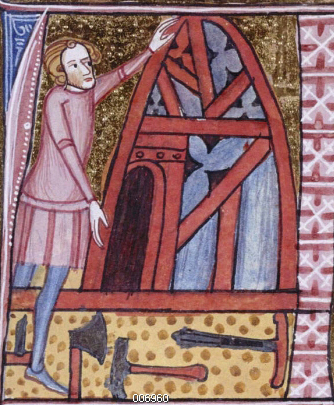
Cooper's monograph is predominately interested in medieval artisans, how they formed artisan culture and were appropriated in late medieval texts as both positive figures of social order and possible sources of malcontent. Coopers text provides an interesting look into labor, focusing on the laborers themselves, and does so from a different perspective than many studies on guilds and guild culture have taken. As I read for my exams, it seems more and more that current critical work is focusing on a multi-layered approach, such as John Watts' call to move away from grand narratives of history and to focus on the varied sources of influence on any given time, place, or social strata in late medieval Europe. Accordingly, Cooper considers multiple perspectives of medieval artisans and their cultural cache, looking at the historical reality of medieval artisans, texts on those artisans, the ideological concept of the artisan in late medieval Europe, and the concern that artisans could represent to medieval audiences. The above image, for example, demonstrates Cooper's point, as she argues that at first glance the artisan appears to be a positive figure proudly building, but the text following shows that this craftsman is literally building upon a foundation of sand and thus represents an immoral (and irreligious) life.
While my research interests definitely dip into labor, my reading up to this point has led me to be more familiar with mercantile culture. Cooper's discussion of the artisan bears a great deal of similarity with the development of the merchant in this period. Both the merchant and the artisan show growing economic power, social standing, and cultural importance in the Middle Ages. Furthermore, each demonstrates some social concerns over the growing importance of a continuously monetized and commercialized society. One primary difference perhaps lies with the merchants more negative image, especially closer to twelfth and thirteenth centuries, but both the merchant and the artisan represent a similar issue: a form of employment that, due to changes in population and commercialization, gains greater power to transgress social boundaries. It is of little wonder then that Cooper's first chapter in particular treats texts that deal with the intersection of the merchant and artisan, predominately in their marketplace interactions. In these texts, such as Caxton's Dialogues, Cooper discusses how the role of the merchant in moving the artisan's goods to market creates tension, yet even in buying from the artisan directly Caxton's text suggests tactics ranging from demeaning the quality of the artisan's work to ad hominem attacks in order to attain a good price for the goods in question.

I also found Cooper's second chapter of great interest, specifically in how she considers artisans as "not only makers of domestic space, but residents in it"(58, original emphasis). Often, previous critical attention on artisans has focused predominantly on guild construction and culture, possibly due in large part to the survival of several guild documents. Cooper makes the point, for example, that much previous critical work on artisans has focused on mystery play cycles due to the direct involvement of guilds in the production of the texts and performances alike. Instead of following this trend, Cooper, traces artisan culture through a number of texts, spending a fair amount of time on Chaucer's The Canterbury Tales. While Chaucer's texts have certainly met with their fair share of attention, Cooper uses the social cross section that the Tales provides to show the interaction between artisan cultures of various levels, even pushing to explore the gender dynamics contained therein. Cooper's text deserves more engaged treatment than is provided here, and I certainly find the voice that her text adds to the conversation of my exam reading valuable and pleasing.

No comments:
Post a Comment