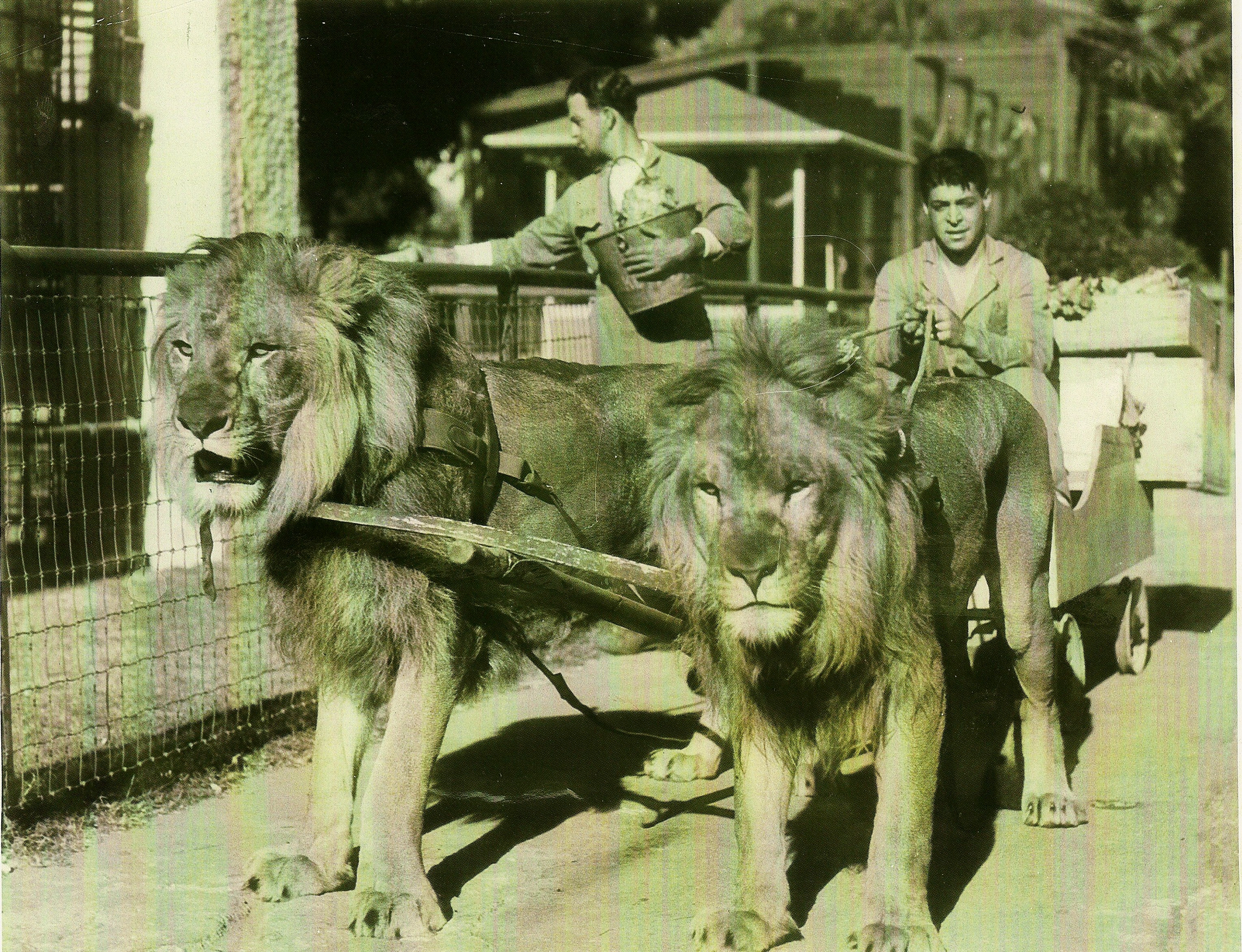
Another rather short Middle English saint's life, St. Jerome and the Lion is primarily a retelling of Aesop's fable of the Lion and the Mouse. In this text, however, it is St. Jerome that heal's the lion's paw, leading to said lion helping the monastery. While there's not much more for me to chew on in regards to the fable itself, and the TEAMS text intro even suggests that this tradition may result from attempts to make an otherwise dreary saint's life more interesting (105), I find the form and terminology of the lion's service to the monastery rather interesting from an economic/labor perspective.
After he is healed, the lion hangs around the monastery as a tame best" (10), but rather than simply taking the animal on as a pet St. Jerome sees a greater purpose in the lion's presence. Specifically, Jerome believes that the lion came not simply for healing "but also for theire profyghte"(12). While the Middle English term "profyghte" can certainly have a wide range of definitions, there is a common connection to the sense of profiting from economic exchange, much like the modern connotation. Furthermore, Jerome promptly puts the lion to work herding the monastery's sole ass (btw, searching google images for "lion" and "ass" together doesn't end the way you necessarily want it to), bringing the donkey back when the monastery has need of it for labor. The lion has thus engaged in a service contract of sorts with the monastery, providing the labor of sheepherding in exchange for the initial tending of its wounded paw and later daily feeding.
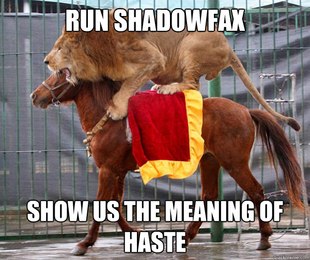
The lion's mutually beneficial labor is disrupted, however, by wandering merchants who, while the lion is taking a nap, "stale the asse and had here forthe with theym" (20-21). The implication that merchants are willing, simply at seeing the opportunity, to steal a beast of burden from the monastery is certainly a pejorative judgment on the profession, tied to the general anti-mercantile perspective of the clergy in the 13th century, but even more so the move by the merchants to capture as much "profyghte" as possible works against the honest labor conducted by both the lion and ass. The lion takes over the ass's labor without complaint until the animal can be recovered, but the suggestion that merchants disrupt labor may tie to some of the issues raised by Diana Wood's book, specifically the move to curtail the various forms of monopolies by merchants who might do such things as hoard and withhold a commodity from the market in order to artificially raise the demand and subsequent prices for that commodity. Such a move is an immoral attempt to gain "profyghte," one that Jerome dismisses in favor for the "mede and rewarde" that is "to be had of Cryst yn Hevyn" (88-89). Profit in and of itself is not a bad thing, as long as one seeks the proper form of reward.

No comments:
Post a Comment