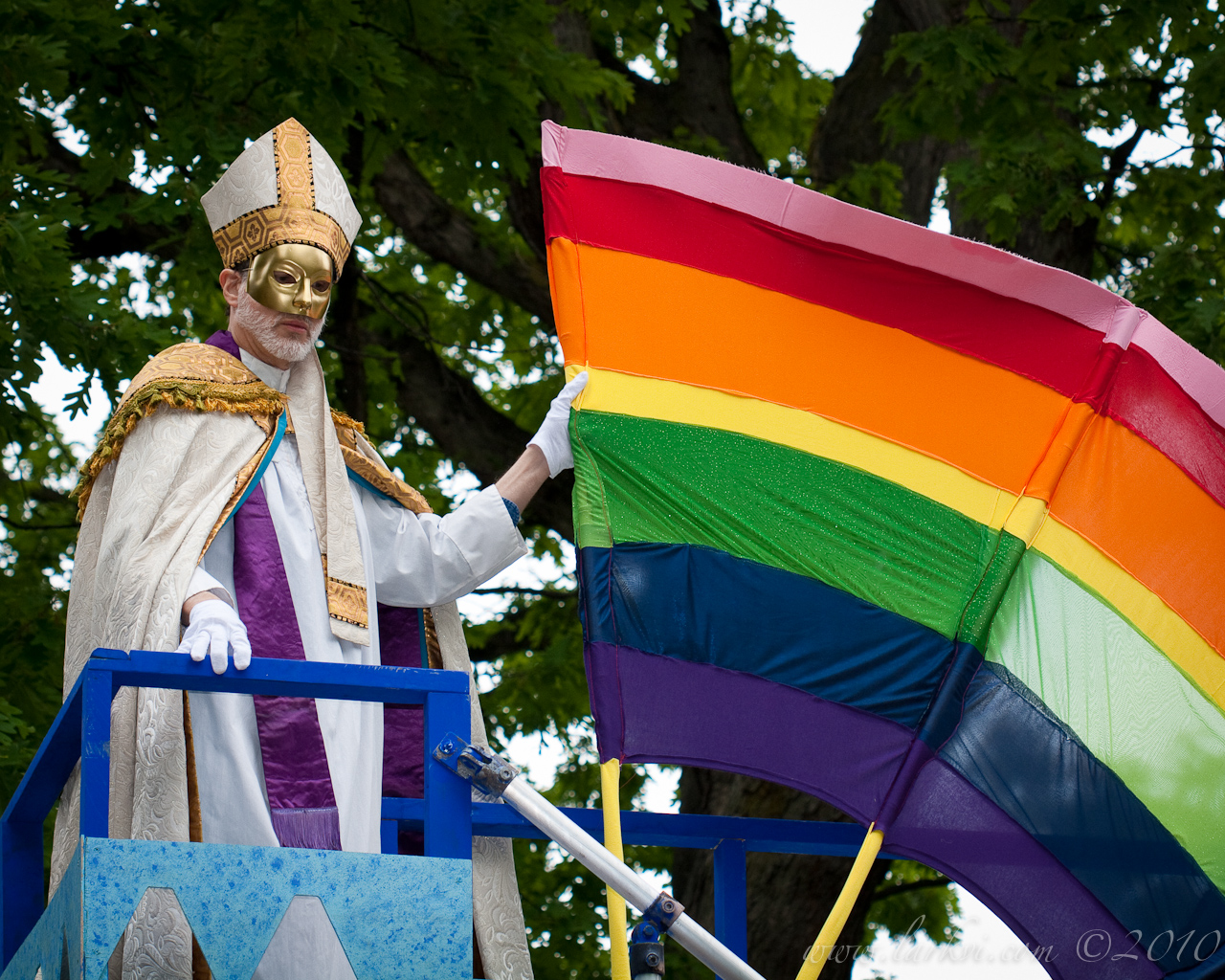
"Noah" in this cycle seems to be a mix of spectacle and humor, with preference towards the former. Much like "Creation and the Fall of Man," "Noah" has ample opportunity for the sponsoring guild to show off their contribution through the props and set of the Ark and animals traveling therein. While I'm not entirely certain how this would apply to the "Waterleaders" that sponsored "Noah," the "Creation" play was often sponsored by the Drapers who used their wares extensively in the production as both a display of their economic power and an advertisement of their product. Predominantly, "Noah" is a long catalog sandwiched between God's pronouncements to Noah. The only real deviation from this dynamic is the refusal of Noah's wife to enter the ship.

Noah's sons and daughter-in-laws promptly get with the program and aid in the construction of the ark, despite the fact that "Women be weake to underfoe / Any great travayle" (67-68), but Noah's wife presents a constant refusal to enter the ark. In large part, this seems to be a chance to have an anti-feminist bit of comedy as Noah's wife flippantly decides to be obstinate, takes time to go drinking with her fellow gossips, has to be carried on board the Ark by force, and even strikes Noah once she is secured on board. In some ways this reminds me of critical discussion of Chaucer's the Wife of Bath, specifically those that take her as an anti-feminist character. Personally, I see what the Wife of Bath is doing as subverting that role of the gossipy middle aged woman, exchanging sex for authority from her husbands. Noah's wife seems to be the flat, normative version of that approach, an older woman given to drink, gossip, and obstinacy for the sake of being obstinate.

No comments:
Post a Comment